Thursday, October 15, 2009

Wall Street and the “Real Economy”

A never-ending subject of thoughtful deliberation among economic and finance professors is the relation between the “Wall Street” and the “real economy” – whether the woes in the realm of finance spill over to the “real economy”.

You can see why the simple question remains an impossible puzzle. The very first step in answering it would be to define finance and explain what is meant by the real economy – without quotation marks. That, the university economics cannot do. Hence, the endless discussions and points and counterpoints.

In Vol. 4, I take up this question in detail. Before then, here is a news item from the New York Times to highlight the relation between finance and the real economy. The article is about the massing of lobbyist to influence the new law overhauling the financial industry.
But since virtually every imaginable company could be touched by the comprehensive legislation proposed by the Obama administration, the surprisingly broad array of lobbyist trooping to Capitol Hill also includes advocates for airlines, pawnbrokers, real estate developers, farmers, car dealers, retailers and energy and telephone companies. They want to make sure any new oversight of the financial system does not lead to tighter regulations of their businesses or make it more expensive for them to finance their operations or hedge their risks.
By far, the most direct link between finance and industry is through money markets, where hundreds of billions of dollars of the corporate working capital are parked to earn a few basis points. Any loss of this capital directly impacts the production and could even disrupt it, as we saw in the aftermath of the Lehman bankruptcy.

The Death of A Deal Man

Bruce ‘Bid’em-Up’ Wasserstein was born a deal maker. He was born in Brooklyn, went to the University of Michigan, studied business and law at Harvard, did a stint at Cambridge, became a Knox Fellow and authored a book, but his true love was deal making. He was called smart, driven, a chess player, a strategist, a tactician, but all he wanted to do was make deals. “In the deal world, there was Bruce, and then there was everyone else,” people said. He thrived in the deal making frenzy and he made deals always and everywhere so everywhere he went turned into the Deal World – the Hamptons, his Midtown office, home, planes, trains, automobiles. “Let’s make a deal,” he would say. And he made deals fast and furious, so fast and furious that once he overloaded First Boston’s phone system. His deals were many and varied: Philip Morri’s purchase of Kraft and General Foods; Ichan’s assault on AOL Time Warner; Kraft’s potential takeover of Cadbury; KKR’s takeover of RJR Nabisco; Texaco’s acquisition of Getty Oil; ABC’s sale to Capital Cities. Sometimes things did not work out. KKR’s takeover of Nabisco was a fiasco. Texaco’s acquisition of Getty led to a $10 billion court judgment. But through the thick and thin Bruce remained undeterred. He made deal making an art, made it a street fighter’s game, made it lucrative for himself and corporate raiders and greenmailers. He created the “Pac-Man defense” and “front-end loaded two-step tender”, built his own firm, sold his own firm, tried merchant banking, returned to deal making and accumulated immense wealth, but his true love remained deal making. On Wednesday, Bruce died. He left a wife, 3 ex-wives, 8 children, a tangled estate and an untold number of undone and as yet to be conceived deals behind.

Wednesday, October 14, 2009

Financial Regulation, Theoretical Poverty (2 of 2)

In a perceptive line in The Critique of Dialectical Reasoning, Jean Paul Sartre writes that “the future comes to man through things in so far as it previously came to things through man.”

The idea is not new, but Sartre expresses it more eloquently than others. What he is saying is that, in the course of his material activities, man creates tools and organizations whose very presence compels him to act in a certain way, thus shaping the course of the history. Sartre’s example is a machine. “Thus, the machine demands to be kept in working order and the practical relation of man to materiality becomes his response to the exigencies of the machine,” he writes. Man is the product of his product.

As with machines, so with the financial systems. They, too, demand to be kept in working order. But unlike machines which are built on well-understood principles and can be relied upon to work in a precise manner, the working of financial markets remains hidden from the view because they are created in response to the exigencies of finance capital. Finance capital cannot itself create markets. It employs the regulator, the trader, the professor and the banker as its proxies to the do job. These men are endowed with a free will, but, unbeknownst to themselves, they do the bidding of speculative capital, building the markets to its needs and specifications.

Speculative capital is capital engaged in arbitrage. In Part 1, we saw how it logically and seamlessly develops from trading and hedging. Vol. 1 in its entirety deals with this particular question.

Arbitrageable differences are never large enough to allow for a comparable return with other forms of capital; it would be a gross inefficiency in capital markets if they were. So, speculative capital boosts its return through leverage, i.e., borrowing. Wall Street Journal, Oct. 16, 1995:
Before [February 1994], speculators had been borrowing at a short-term rate of like 3% and buying five-year Treasury notes yielding around 5%, a gaping spread of two percentage points that enabled some to double their money in a year. The math was tantalizing. Using leverage, an investor with $1 million could borrow enough to acquire $50 million in five-year Treasury notes. And the spread of two percentage points could generate about $1 million in profits on the $1 million investment.
There is, however, little money to be made in Treasuries; the article makes it clear that the golden opportunity was arbitraged away some time ago. To make money through arbitrage in the bond market, one has to go down the credit ladder. But the lower-rated securities could not be pledged as collateral for borrowing. Could the Fed, perhaps, help? The WSJ, April 1996, describing what the Fed called “one of the most significant reductions in regulatory burdens on broker-dealers since 1934”:
The final rules … will eliminate restrictions on a broker-dealer’s ability to arrange for an extension of credit by another lender; let dealers lend on any convertible bond if the underlying stock is suitable for margin; increase the loan value of money-market mutual funds from a 50% margin requirement to a ‘good faith’ standard … and allow dealers to lend on any investment-grade debt security … the Fed will allow the lending of foreign securities to foreign persons for any purposes against any legal collateral … It will also expand the criteria for determining which securities qualify for securities credit, a change that will sharply increase the number of foreign stocks that are margin-eligible.
This is saying that many securities that were not eligible as collateral could now be pledged as collateral – for more borrowing. What follows is not merely predictable; it is inevitable. WSJ, Sept 22, 1997:
Everyone who has even thumbed casually through the books of securities firms recently agrees they are more highly leveraged than ever.
You see the loop-feedback mechanism at work. Every phase of the process, from the rise of speculative capital, to broker-dealers borrowing more than 30 times their equity, takes place rationally. Even the collapse is rational, as it is the necessary outcome of the operation of a self-destructive force.

What would you do if you were the Fed chairman or the Treasury secretary under these conditions? The “practical” answer is that, Lehman aside, pretty much what they have done in the past two years. There was, realistically speaking, no other option.

Speculative capital, you see, not only eliminates the arbitrage opportunities but the policy options as well. Men can boast of their free will. But what defines freedom is the availability of choices. As the choices narrow, the freedom is curtailed. A man without choice is a condemned man. Speculative capital limits the choices by creating conditions in which any action not in accordance with its interest looks naive, irrational or radical.

Such an environment is ripe for the rise of men most concerned about looking naive, irrational or radical. They are the functionaries and palan-doozan whose policy decisions at all times remain preordained. When they deviate from the prescribed course, not so much due to courage but incomprehension, the ensuing storm publicly chides and corrects them. Lehman bankruptcy was the Exhibit A in that regard.

Nothing illustrates this subjugation of man to the dynamics of speculative capital better than the option valuation theory. As I showed in Vol. 3, the entire option valuation literature is fundamentally incorrect and based on a misunderstanding. An option is not a right to buy or sell. It is right to default. This is the very “scientific-mathematical outlook” which Paul Krugman pompously called “the true glory of our civilization”.

Under these conditions, when the actions of the players are influenced by a hidden force, the regulation of the financial industry can proceed on only two paths. It must either be in conformity with the needs of speculative capital, such as creating a living will for the institutions to go out of business without complications, or skirt the issue altogether, which is just about everything else, including executive bonus and consumer protection. If any provision of the law currently being written contradicts this general outline, the matter will be worth a second look. But do not bet on it.

But is it possible to “do something”, Mr. Saber, anything at all, about the situation? After all, you criticized Godard for being nihilistic. Between not succumbing to speculative capital and destroying the system altogether, do you have any bright ideas?

To that hypothetical question, I had a modest answer a while back. I humbly suggested that shorting Treasuries be disallowed. This would be tantamount to turning a floodlight on a vampire. It will not kill the beast but temporarily paralyze it.

Given the reality around us – the amount of trading that is centered around Treasuries, for example, and the liquidity that such trading provides to the financial markets – the proposal is too radical and thus, naive.

Thursday, October 8, 2009

Financial Regulation, Theoretical Poverty (1 of 2)

One of the issues being debated these days is the regulation of over-the-counter derivatives, the privately negotiated, customized contracts that exist in a legal world parallel to their standardized, exchange-traded cousins. The Financial Times was surprised that even the European industrial companies had come out against the regulation:
Some of Europe’s industrial companies have warned they could shift their financial hedging away from Europe if proposed reforms of the vase over-the-counter (OTC) derivatives markets go ahead as proposed by the European Commission ... The comments show that opposition to a key part of US and European proposals for reform of the financial system is gathering from an unexpected quarter: industrial companies.
The paper gave the reason for the opposition without, naturally, understanding the centrality of the issue to the current crisis:
Many companies use OTC derivatives, such as interest rate and currency swaps, to hedge routine business risks like fuel purchase and future pension liabilities.
This need of industrial companies for hedging is the genesis of the speculative capital, the latest and most versatile form of finance capital, that is born from the marvelously dialectical transformation of defensive hedging to predatory arbitrage. I was first to explain this metamorphosis in Vol. 1:
The most important point in the rise of arbitrage trading is that the practice develops logically from hedging and, on paper, is indistinguishable from it.

The purpose of hedging is preserving the owners’ equity. The hedger begins with an existing asset (liability) and seeks to find a liability (asset) which will offset its adverse price changes. The purpose of arbitrage, by contrast, is profit. The arbitrageur has neither an asset nor a liability. To that end, he looks for any two positions which will enable him to “lock in” a spread. The two acts are mathematically indistinguishable. What logically separates them is the purpose of each act which translates itself to the sequence of execution of trades. When done sequentially, the act is defensive hedging. When done simultaneously, it is aggressive arbitrage. Otherwise, the transformation of one to the other is seamless.
The sole subject of finance is studying the laws of movement of finance capital and its various forms such as speculative capital. The role of individuals, to the extent that it exists, is incidental.

The centrality of finance capital in studying finance is acknowledged – if only unconsciously and unknowingly – by the mouthpieces of the orthodox economics. They, who never tired of sounding off on the primacy of the individual and his supposed “free will” as an “economic agent”, these days talk of “jobless recovery”. Google the phrase and see how through sheer usage it has become an accepted term of discourse.

Writing in his column about the expanding army of the unemployed, Bob Herbert of The New York Times condemned this point of view without understanding its roots.
The Beltway crowd and the Einsteins of high finance who never saw this economic collapse coming are now telling us with their usual breezy arrogance that the Great Recession is probably over. Their focus, of course, is on data.
In the phrase “jobless recovery”, the news pertaining to the people is grim; there are no jobs to be had. Yet it contains “recovery”. So, what is it that is being recovered? The answer is: the agreeable rate of return of capital. The “data” measures the pulse and performance of capital, which the university professors study and comment about without ever understanding the larger issue surrounding it.

The outward appearance of the phenomena in economic life is deceiving. In fact, the appearances tend to show the opposite of what is actually taking place. Hence, the authority of the great thinkers of the classical economics who showed us the way.

The story-telling school of economics and finance that is in currency now concerns itself with the most immediately visible. Naturally, it gets everything wrong. Here is a full time professor of economics and finance at Yale explaining a crisis that has paralyzed much of the world for the past two years:
“The fundamental problem, as Franklin Delano Roosevelt said in 1933, is fear”, [Robert] Shiller, a Yale University Professor said. The great depression was deepened by a “sense of lost confidence and animal spirits that was a self-fulfilling prophesy. The worry is that we will have the same kind of issue rising again,” he said.
Even academics are beginning to see the superficiality of their theories; the long-present elephant in the room can no longer be ignored. The policymakers always knew it, which is why they practiced “pragmatism”. But in markets dominated by finance capital, pragmatism – doing the “proper” thing given the circumstances – is nothing but yielding to the diktat of finance capital. That is the part that neither the policymaker nor their critics who accuse them of “taking the side of their banker friends” understand. Like the focus on the data that Herbert criticizes, the problem goes much deeper.

I will return shortly with the second and final part of this piece.

Sunday, September 27, 2009

A Glimpse of the Monetary Policy (in Action)

So, what rules did Bernanke break when he tossed out the rule book?

Here is a story about the reduction in the Treasury’s Supplemental Financing Program that no one probably read because the few who understood it did not have to read it and the rest would not get it. According to Bloomberg:
The U.S. Treasury Department plans to cut back its borrowing on behalf of the Federal Reserve as it seeks to keep government debt under a legal limit ... The Treasury will reduce the outstanding borrowing in its Supplementary Financing program to $15 billion “in the coming weeks,” the department said in a statement in Washington. The Treasury has been keeping the account, set up last year to give the central bank more flexibility as it undertook unprecedented lending, at about $200 billion.
Note the critical phrase “on behalf” in the opening sentence – the Treasury is planning to cut back its borrowing on behalf of the Federal Reserve. That is an accurate characterization of the program, although the phrase does not appear in the Treasury communiqué that announced the inauguration of SFP. The dreary language of the announcement precludes the use of simple phrases such as “on behalf” and that is a good thing, because the phrase invites inquiry.

What does on behalf mean?

It means that the Treasury is borrowing money not for its own needs but at the instruction, and for the benefit of, the Federal Reserve.

As any loan officer would tell you, that cannot be done; you cannot borrow money on behalf of anyone. In this particular case, there are added complexities.

The Department of the Treasury represents – stands for – the U.S. government in financial markets. Only it, and no other entity, can borrow as, and on behalf of, the U.S. government. That is another way of saying that any borrowing by the U.S. Treasury is, per se, borrowing by the U.S. government, regardless of the intent and the use of funds. You can see this in the Bloomberg story. The Treasury is curtailing the program in order to reduce the U.S. government debt [which was reaching it legal limit of $12.1 trillion]. So the Treasuries issued “on behalf of the Fed” were clearly counted as part of the U.S. government's debt.

But why the need for this arrangement? Can't the Fed borrow money itself?

The answer is, No, it cannot. It is prohibited by law from doing so. Earlier this year it tried to change that law , but ran into opposition and a wall of technical complexities. Some insiders also did not like the idea of the Fed issuing its own debt, but I was enthusiastically for it. I wanted to see how this debt would be priced against the Treasuries.

The Fed, you see, cannot borrow as the U.S. government because it is not the U.S. government – or any part of it. It is not a part of the executive branch. It is not a part of legislative branch. And it most certainly is not a part of the judiciary.

The Fed was incorporated as an entity in 1913. It is comprised of private banks and follows an “independent" monetary policy – independent in the sense that it operates without regards to the economic policies of the government. That is another way of saying that it runs its business as it sees fit no matter who or what party is in charge.

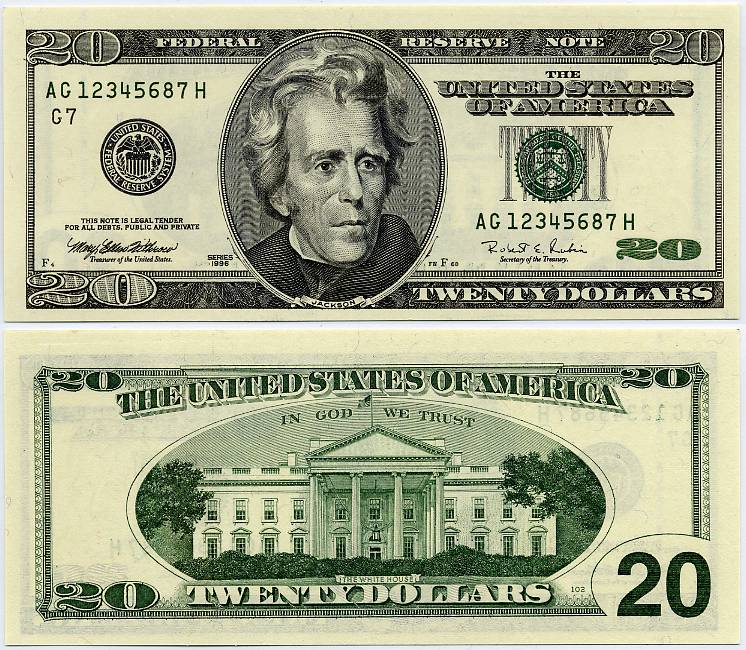
The Fed’s business, among other things, is issuing Federal Reserve Notes, commonly known as money. If you take a bill from your pocket you will see that at top of the side which has the picture of a dead president, it says: Federal Reserve Note. The authority of issuing money and conducting “monetary policy” is vested in the Federal Reserve. The Treasury – that would be the U.S. government – has no say in it.

Why is an “incorporated entity” in charge of the nation’s money supply and monetary policy is a topic for another occasion. We were considering whether the Treasury could borrow money “on behalf” of a non-governmental entity and we saw that the answer was no. The U.S. government could guarantee a borrower – whether explicitly like Ex-Im bank credit lines or implicitly, like old Fannie Mae and Freddie Mac – but it cannot borrow under its name and turn over the funds for the use of others. Yet, as the Treasury secretary, Paulson agreed to this arrangement and Geithner continued with it. Bernanke was not the only one tossing out the rule book.

Why does the Fed which controls money and money supply need the Treasury Dept to arrange borrowing on its behalf?

The answer is that the purpose of the SFP is not so much getting money into the Fed as it is siphoning it out of the system.

Historically, the Fed had strict requirements for the so-called “Fed eligible” securities that the banks could pledge in return for cash. After Lehman, those rules were tossed out and the Fed began taking in junk synthetic securities as collateral that were trading as low as 22 cents on a dollar. However, it accepted them at much higher values than the market, at times close to par, because that is where the banks had financed the securities. If you had $5 and borrowed $95 to buy a $100 security whose price subsequently dropped to $40, you still owed $95. The market did not pay more than $40 for it, but you needed $95. The Fed came in and took your junk for $95. After all that talk, for more than 30 years, about the critical role of the markets in price discovery and fair pricing, the fair market value was likewise tossed out. That was the mother of all rule violations, a replay of the worst excesses of the most unscrupulous mortgage-brokers: valuing the underlying collateral higher than its market price.

In this way, between the summer of ‘07 and January ‘09, the balance sheet of the Fed increased from just above $700 billion to over $2 trillion. The quality of its assets moved in the opposite direction.

The flooding of markets with so much money, above and beyond the value of securities “in play”, risked inflation. To counter that, the SFP was created to take the money out of the system. The Treasury Dept sold Treasuries to take in the money that the Fed had provided to the market in return for junk collateral. Presumably, the monetary policy gurus at the Fed thought that that would be the end of the cycle. But capital is a thing in motion. There is no end point in its circulation. The financial institutions which bought the Treasuries pledged them again with their counterparts for the cash. And the Fed, in order to keep interest rates low and the money flow going, began “quantitative easing”, a code for buying the Treasuries! So, here is the full cycle: giving money away, siphoning it out of the system through the sale of the Treasuries and then introducing it to the system by buying the Treasuries! That is the monetary policy for you.

According to the official statement, the termination of the SFP would have no adverse effects on the Fed actions. The Fed officials stated that that they have other policy levers at their disposal.

I bet they do.

Tuesday, September 15, 2009

Looking Back in Incomprehension

It is the anniversary of Lehman’s demise and everyone is looking back for “lessons learned”. The passage of time has not helped. The usual nonsense about greed, bad management, etc. is being regurgitated, with a new spin making the rounds: that Lehman’s demise prevented even bigger collapses. Goldman’s Blankfein was first to float this nonsense.
“A bailout of Lehman Brothers might have provoked a public backlash, causing the government “to let the next institution fail” instead, Blankfein said ... “It might have been a much bigger one with much more dire consequences.”
Joe Nocera of the New York Times picked up the same theme in a front page article claiming that if Lehman had been saved, a much bigger firm such as Merrill might have collapsed.

The claim can be neither proved nor refuted. It is an idle conjecture. Nocera’s Merrill example shows how little he knows about the markets. Merrill was bigger in terms of assets. But Lehman was a far more “connected” – systemically important, if you will – firm. It was one of the largest issuers of commercial paper. It was the freezing of the CP market, after Lehman had filed for bankruptcy, that triggered the crisis.

The spin tries to make the boys who let Lehman down look less bad. Nice try, gentlemen.

The how of Lehman’s collapse is a technical matter involving the business model of a highly leveraged broker-dealer. I described it in detail in the Credit Woes series, especially parts 9 and 10.

The why of Lehman collapse – why Geithner, Paulson and Bernanke allowed it to happen – cannot be known without a full confession from the said individuals. But I doubt that malice, in the sense of involving calculations and plot, played any role. That would be giving these men credit for what had to be a complicated chess move.

The truth is more banal. I think I came close to it when I described why Lehman was allowed to fail. Read it here and judge for yourself.

Looking back, I also think that I grasped the significance of the event better than others. Read it and judge for yourself.

Sunday, September 13, 2009

Functionaries (passed off) as Revolutionaries

I was at the start of my vacation when Bernanke was reappointed. In terms of newsworthiness, then, the story is a tad dated. But this is not a news site, and there are important points about the reappointment that I would like to write about.

Ben Shalom Bernanke secured a second term as the chairman of the Board of the Federal Reserve because he played ball in his first term. He played ball obediently and unquestioningly.

In the ceremony announcing the reappointment, President Obama said that Bernanke’s “bold action and out-of-the-box thinking” helped save the economy from free fall. That was the agreed-upon line on Bernanke that the media had been promoting for over a year: a bold and unconventional thinker and doer – a veritable revolutionary, in other words, of the kind that these crisis times demanded. Google “Bernanke + rule book” and see how many sources, from the New York Times to the National Public Radio, approvingly talk of Bernanke “throwing out” or “tossing out” the rule book – the rule book being the policies of the Federal Reserve.

Rule books spell out the details and boundaries of actions in organizations. They are written to be followed. Anyone who has ever worked in an organization knows that ignoring the rules, to say nothing of tossing them out altogether, would be committing career suicide. In many cases, it would be a criminal offense. Imagine a pilot violating the rules of aviation. Or an accountant ignoring generally accepted accounting principles. Or a bank compliance officer not reporting suspicious transactions. Such conduct is so predictably ruinous that if willful and intentional, must to be pathological.

For Bernanke, this pathology was presented as heroic and as the evidence of his courage. The trick worked thanks to the perversion of the social frames of reference, of the kind that Shakespeare said make foul fair, black white, wrong right, base noble and coward valiant.

Let us begin with the “tossing out” part, that not-playing-by-the-rules shtick that is invoked to conjure up the go-it-alone ways of the heroes the Western movies. Hollywood was instrumental in creating the link between such “mavericks” and the frontiersmen who built the U.S. In the American psyche, patriotism and individualism – the latter connoting non-conformity – are thus linked.

The American individualism, however, always had a commercial base, even when it took the form of exploring the nature. The “enterprising” men and women could go off the well traveled paths and take whatever risks they chose, as long as their goal remained pursuit of money, which the Founding Fathers somewhat defensively called “the pursuit of Happiness”. That kind of individualism was encouraged, promoted and admired because it was in line with the guiding principles of the country.

Individualism, if it involved questioning the guiding principles which were codified in law, was strictly discouraged because the “common good” was supposed to trump individual interest. Those who went against these principles, whether for personal gains or out of concern for others, were branded outlaws and dealt with accordingly.

With the rise of speculative capital, the balance between the individual and the common good – between the narrow and general interests – was shaken in favor of the narrow interest. Speculative capital is an expansionary force. Expansion is the condition for its preservation. Constant expansion naturally brings it into conflict with the myriad of laws and regulations which inhibit its growth. So it strives to eliminate them. In Vol. 1, I wrote at length on the dialectical relation of speculative capital to law and regulation, which produced, starting with the Carter presidency up to current times, the longest running orgy of deregulation in the history.
Speculative capital abhors regulation. Regulations interfere with the cross-market arbitrage that is its lifeline. If speculative capital cannot freely operate, it cannot generate profits and must cease to exist. The opposition of speculative capital to regulation is thus not a matter of some technical or tactical disagreement but a question of life and death.

The attack of speculative capital on regulation is not indiscriminate. Though generally suspicious of regulation, speculative capital singles out only those regulations which directly or indirectly hinder its free flow across the markets. The same speculative capital, meanwhile, supports and pushes for the passage of sweeping laws. In so opposing the regulation and supporting the law, speculative capital distinguishes between the two in ways few philosophers of law could.
But how could the idea of dismantling laws that protected the common interests be sold to the public? The trick was in framing the issue “properly”, which is to say, emotionally, by personalizing it. Whilst originally the “common good” trumped individual interests, now the concern for the individuals was used as the pretext for discarding the rules for the common good.

Focusing on the individual is the secret and foundation of storytelling in which Hollywood excelled. So beginning in the early ‘70s, parallel to the rise of speculative capital, we see the appearance of Clint Eastwood as “Dirty Harry”, a sadistic and criminal cop who shot and tortured suspects but the audience was made to cheer for him because his actions were in defending the “rights” of the victims. A torrent of vigilante movies and “tough but fair” cops followed, all with a similar theme but progressively more violent and more lawless characters. The culmination of that trend is the current TV show “24” where torture is sold as advisable and even normal.

To what extent this indoctrination – now supported and reinforced by the radio talk shows, newspaper columns and the TV commentaries – has succeeded in making foul fair can be seen from the comments of Antonin Scalia, the justice of the Supreme Court of the United States about the fictional character of “24”.
Senior judges from North America and Europe were in the midst of a panel discussion about torture and terrorism law, when a Canadian judge’s passing remark—“Thankfully, security agencies in all our countries do not subscribe to the mantra ‘What would Jack Bauer do?’ ”—got the legal bulldog in Judge Scalia barking.

The conservative jurist stuck up for Agent Bauer, arguing that fictional or not, federal agents require latitude in times of great crisis. “Jack Bauer saved Los Angeles. … He saved hundreds of thousands of lives”...

The real genius, the judge said, is that this is primarily done with mental leverage. “There’s a great scene where he told a guy that he was going to have his family killed,” Judge Scalia said. “They had it on closed circuit television—and it was all staged. … They really didn’t kill the family.”
Jack Bauer saved Los Angeles. He saved hundreds of thousands of lives!

These words about a fictional TV character from someone charged with interpreting the U.S. Constitution.

(Read the last paragraph again and pay attention to the tone, narrative, the use of “great scene” and the way Scalia articulates what he has seen on TV: “There’s a great scene where he told a guy that he was going to have his family killed. They had it on closed circuit television—and it was all staged. … They really didn’t kill the family.” If this quote is accurate, the man’s mental capacity can be no more than that of a 7-year old.)

It is within this environment that Bernanke’s throwing out the rule book “to save the financial system” was sold to the public as a heroic, albeit slightly unconventional, act – in the manner of Jack Bauer saving Los Angeles from a nuclear attack. The president had little choice. They had him on the run with the same rhetoric and a not-so-subtle threat, in case he did not get the hints:
A top White House official said Mr. Obama had decided to keep Mr. Bernanke at the helm of the Fed because he had been bold and brilliant in his attempts to combat the financial crisis and the deep recession ... Some analysts caution that the economy is still so fragile that financial markets would react badly if President Obama decided to install new leadership at the Fed anytime soon.

“He’s the best person for the job,” John Makin, a senior fellow at the American Enterprise Institute, said of Mr. Bernanke. “Why would anyone want to change the Fed chairman now?”
Why, indeed. That would be like changing Superman just when General Zod had broken into Daily Planet.

Three questions remain. One concerns Bernanke’s boldness. One of the main criticisms directed at Ibsen’s feminist manifesto, A Doll’s House , is Nora’s quantum psychological leap that takes her from being a “silly bird” of a housewife to a woman able to leave her husband – all within the span of 48 hours. The criticism is a valid one. In real life, people who have been meek all their lives would not disturb a comfortable status quo to face uncertainty and danger. How, then, did a meek academic, whom the New York Times described as “a quiet and often unprepossessing person” – and was installed at his position because of those qualities – become so bold so as to throw out the Federal Reserve rule book?

The second question is, how did he know what he was doing, after he had tossed out the rule book, was the right thing to do?

Finally, who was behind Bernanke? Who promoted and passed him off as a bold and revolutionary thinker and doer?

The answer to all three questions is: speculative capital.

Among the official press, the New York Times alone sensed the need to explain the source of Bernanke's uncharacteristic courage; it implied it came from the firm conviction of knowing the right way, itself the result of first-rate scholarship.
Mr. Bernanke was a leading scholar of the Depression who had broken important ground on the links between financial crises and the real economy. In his work on what he called the “financial accelerator,” Mr. Bernanke argued that a run on banks or other disruptions in financial markets could turn a relatively mild downturn into a severe one.
In truth, the quality of Bernanke's academic work is on par with his academic peers: overdone on technical details, dreadfully shallow, almost childish in depth. Here is a single, albeit telling, line from one of his main speeches just before the onset of the financial collapse that shows his grasp of finance.
As emphasized by the information-theoretic approach to finance, a central function of banks is to screen and monitor borrowers, thereby overcoming information and incentive problems.
The central function of banks is to screen and monitor borrowers – this according the “information-theoretic approach to finance”, which he approvingly quotes.

The same year that he spoke of this central function, the U.S. banks sent 5 billions credit card offerings to about 112 million U.S. households – roughly about one credit card per week per household. That is screening borrowers for you.

Bernanke knows finance no more than Scalia knows law – or the reality.

So, no, it was not Bernanke’s knowledge that showed him the way and the strength to act. It was the demand of speculative capital.

Speculative capital is constantly in motion. Whether in expansion during “economic growth” or in retraction during crisis, it naturally finds the most profitable path for itself. Because the public at large has been made to see the events from the viewpoint of speculative capital, the path that speculative capital chooses appears as the only viable, logical option. Alternative options, if they are noticed at all, seem non-workable, irrelevant or radical.

In this way, the course of action becomes preordained and if the rules stand in the way, so much the worse for the rules.

In this environment, functionaries rise to fame. By virtue of unquestioningly executing the diktat of speculative capital, they are thrust upon the center stage as bold thinkers and doers – bold because they discard the existing rules. In doing so, they become the instrument of the destruction of the old system and the creation of a new one in which speculative capital holds sway even more extensively.

But speculative capital is self destructive. It destroys itself and the environment in which it operates, only that each phase of destruction is more intense and violent.

That is where we stand now. The “financial markers” seem to be gradually stabilizing but the Federal Reserve, in circumvention of all the laws and regulation that created it and defined its operations, is saddled with over $2 trillion of junk securities.

When a pilot deviates from the aviation rules or an accountant violates the accounting principles, the consequences are immediately clear. The consequences of the Federal Reserve issuing U.S. treasuries for junk is not immediately transparent. I will return to this topic in later entries and in Vol. 4.

In the mean time, Bernanke’s children and grandchildren will tell tall tales about how Grandpa Ben singlehandedly saved the world from the brink.